

Welcome to the
Future Storytelling :
72 Hour Challenge Toolkit
The Future Storytelling Toolkit is a learning resource for running a 72-hour creation challenge in character development and motion capture. It builds on Future Storytelling, a programme delivered by UMPAKI (Union of Macedonian Associations in the Creative Industries), Curated Place and the School of Digital Arts (SODA) at Manchester Metropolitan University. The programme is supported by the British Council WB-UK Creative Skills Development Fund.
The programme responds to a gap between creative education and studio practice. Young creatives are often trained in one discipline. Real-time and screen production asks them to work in mixed teams, to a brief and under time pressure, with technology that records exactly what they bring to it.
This toolkit sets out the full challenge as a sequence of Miro canvases, from forming a team to handing over to motion capture and Unreal Engine. It is designed for three groups: educators running the challenge with students, students working in teams, and independent creatives building their own studio practice.

Future Storytelling is supported by the British Council WB-UK Creative Skills Development Fund which enables partnerships between the Western Balkans and the UK. This initiative, part of the British Council's Creative Economy Programme, supports the creative industries as strategic economic sectors with transformative potential, with a specific focus on empowering youth skills and employment.
Developed in partnership with:
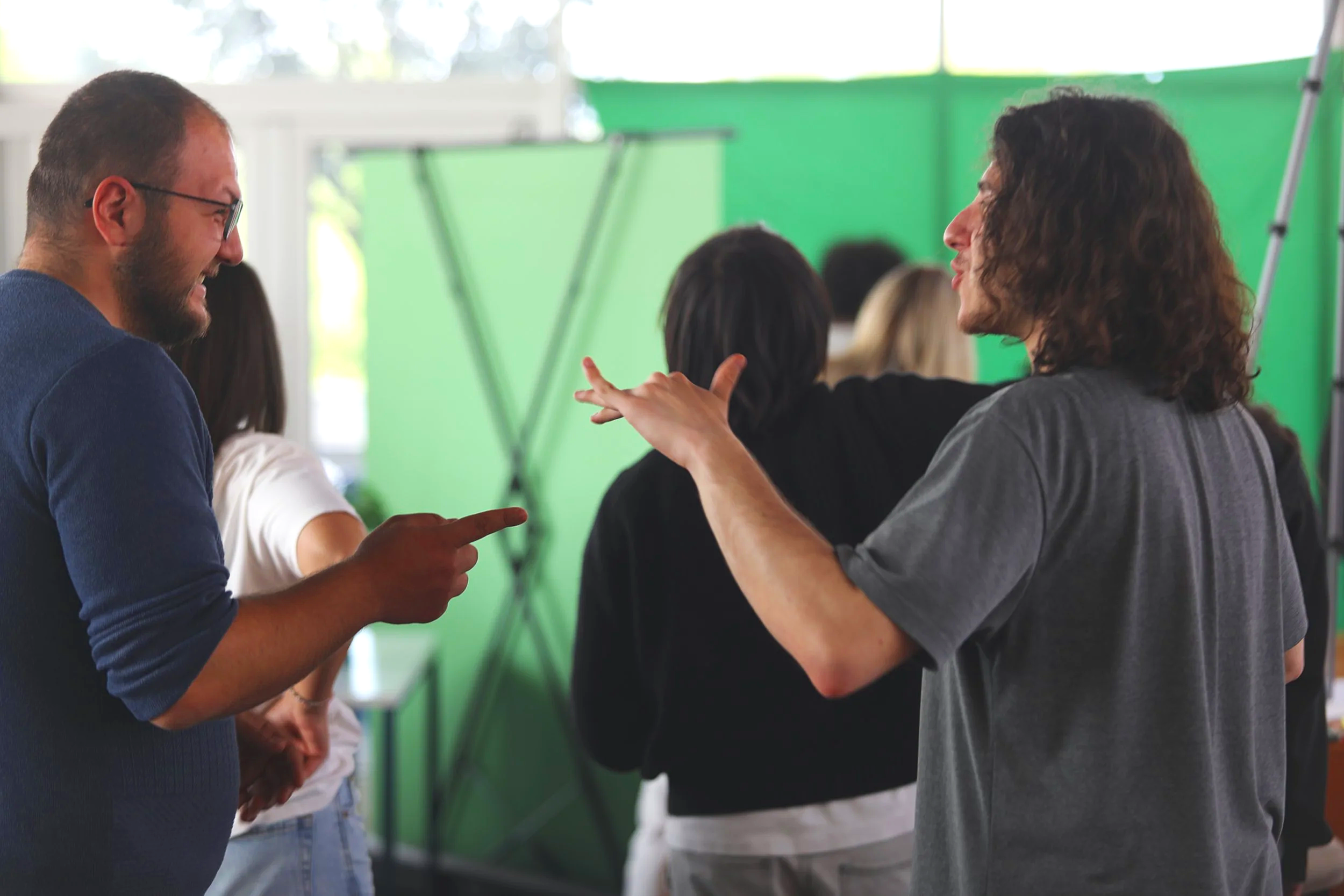
Build a studio team
Most creative training builds individual skill.
The 72-hour challenge tests whether a new team can agree a brief, divide the work and keep moving when the brief changes.
The toolkit helps your team to:
set out who is in the room and what each person brings
let go of a first idea and work from a shared, hybrid character brief
run short daily stand ups that surface blocks before they cost hours
Hosting and scribing rotate at each stand up, so everyone practises the coordination skills that working studios depend on. The canvases give each discipline (design, performance, sound and capture) a defined point at which its decisions feed the next.
Learn a shared method
Every canvas is built on Stanislavsky's Given Circumstances, organised around three questions: Who am I? Where am I? What am I doing here? The method comes from actor training. Here it gives character design, environment, sound and performance direction a common language, so decisions made in one area can be used in the others.
For example, each canvas asks for physical facts. "Afraid" becomes “weight held back, short steps and a nervous check over your right shoulder”, instructions that a performer can act with a level of detail, and motion capture can record it.
The approach is platform-agnostic. It works with suited, camera-based or markerless capture, and with human performers or AI-generated movement. The skills therefore stay useful as production tools change.
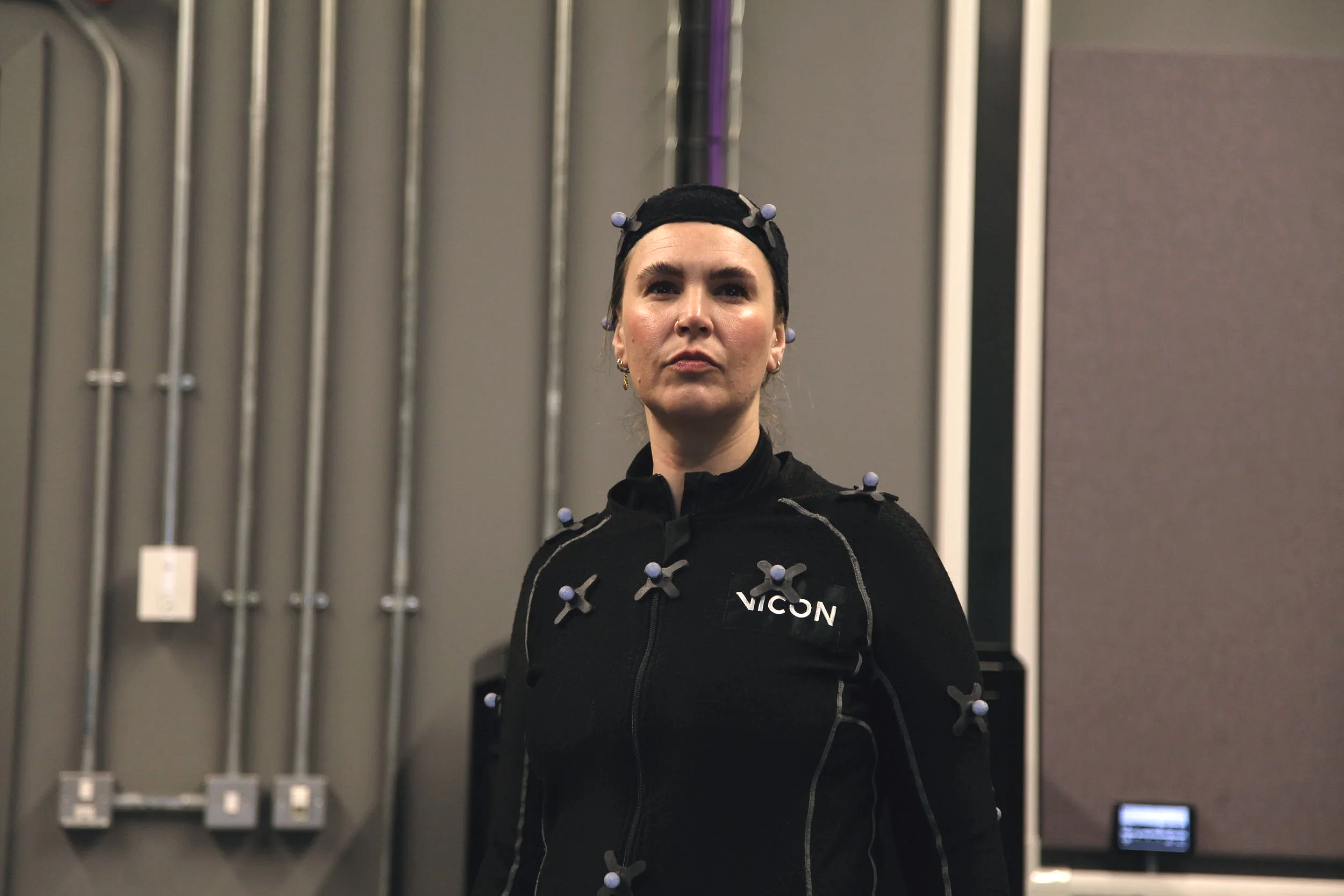
Produce capture-ready material
Each canvas produces a working document that the next stage needs.
By the end of the challenge your team will have:
a hybrid character with defined Given Circumstances
an environmental brief and a single dramatic moment
a sound brief that marks which cues affect performance
a performer rehearsal sheet, and a capture list that works as the playbook for the capture session
This material goes straight into the final stage. There you shoot the performance on multiple cameras and develop a one-minute micro film exploring your character and their setting.
What’s Included
The toolkit directs the three days of the challenge with a structure and resources to develop your studio and character development practice:
Day 1: forms the team and the character.
Day 2: builds the world and the moment the character is in.
Day 3: turns those decisions into sound, performance direction and a capture plan, then hands over to final production.
The approach is platform-agnostic. It works with suited, camera-based or markerless capture, and with human performers or AI-generated movement. The skills learned stay useful as production tools change.
-
Nine canvas sessions and a production handover. The three days are organised as Your team and character, Your world and moment, and Sound, direction and capture.
-
Day 1 establishes technical process and human relationships, Day 2 and Day 3 open with a studio stand up, and each session produces the material the next one needs. Educators can run the full challenge with a cohort. Teams and independent creatives can follow the same structure as a self-led development practice.
-
Future Storytelling is supported by the British Council WB-UK Creative Skills Development Fund which enables partnerships between the Western Balkans and the UK. This initiative, part of the British Council's Creative Economy Programme, supports the creative industries as strategic economic sectors with transformative potential, with a specific focus on empowering youth skills and employment.
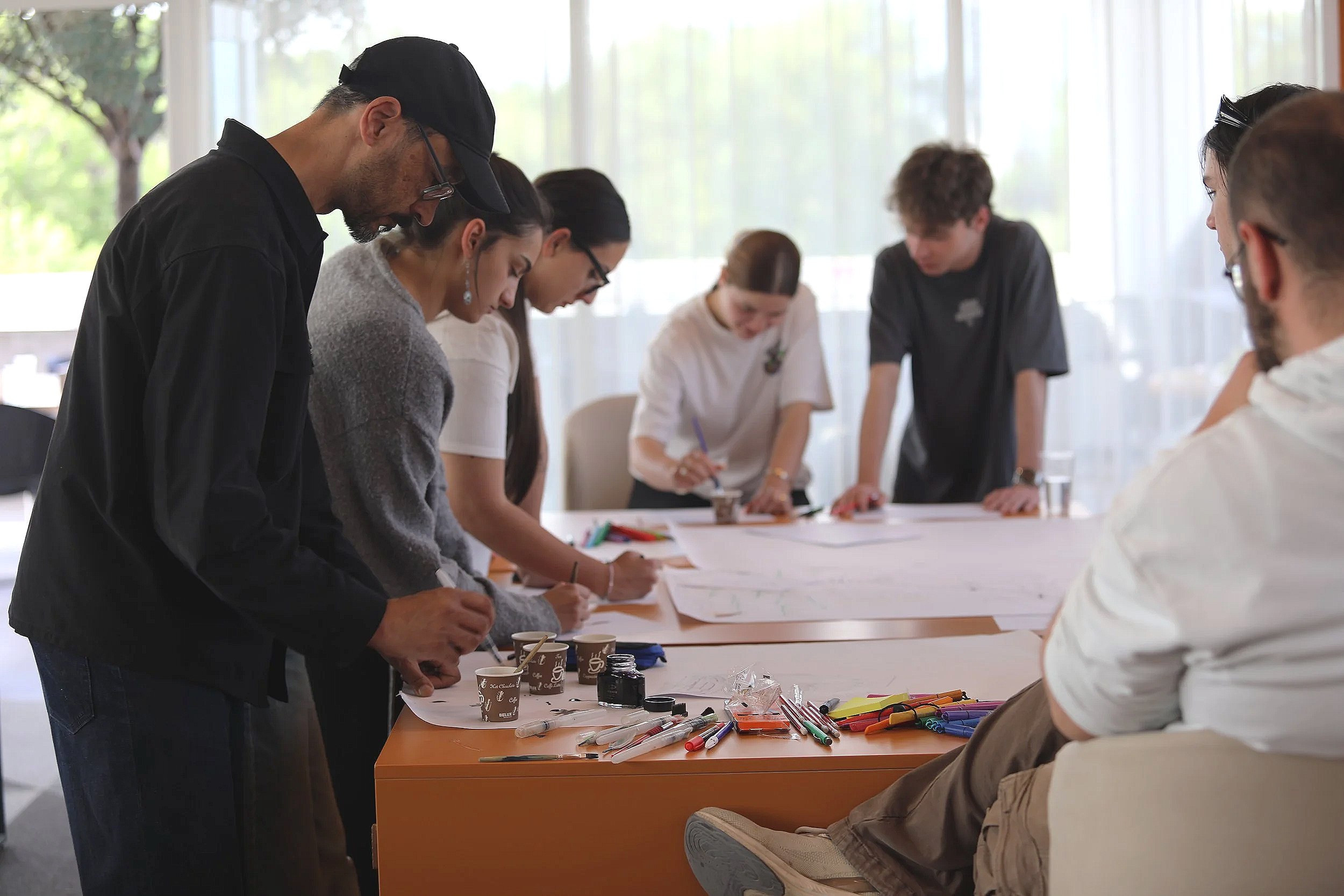
The canvases were tested with young creatives in Skopje in May 2026, at the International Balkan University Skopje Faculty of Art and Design. Work from the challenge was then shown at FLIP Book Festival 2026.
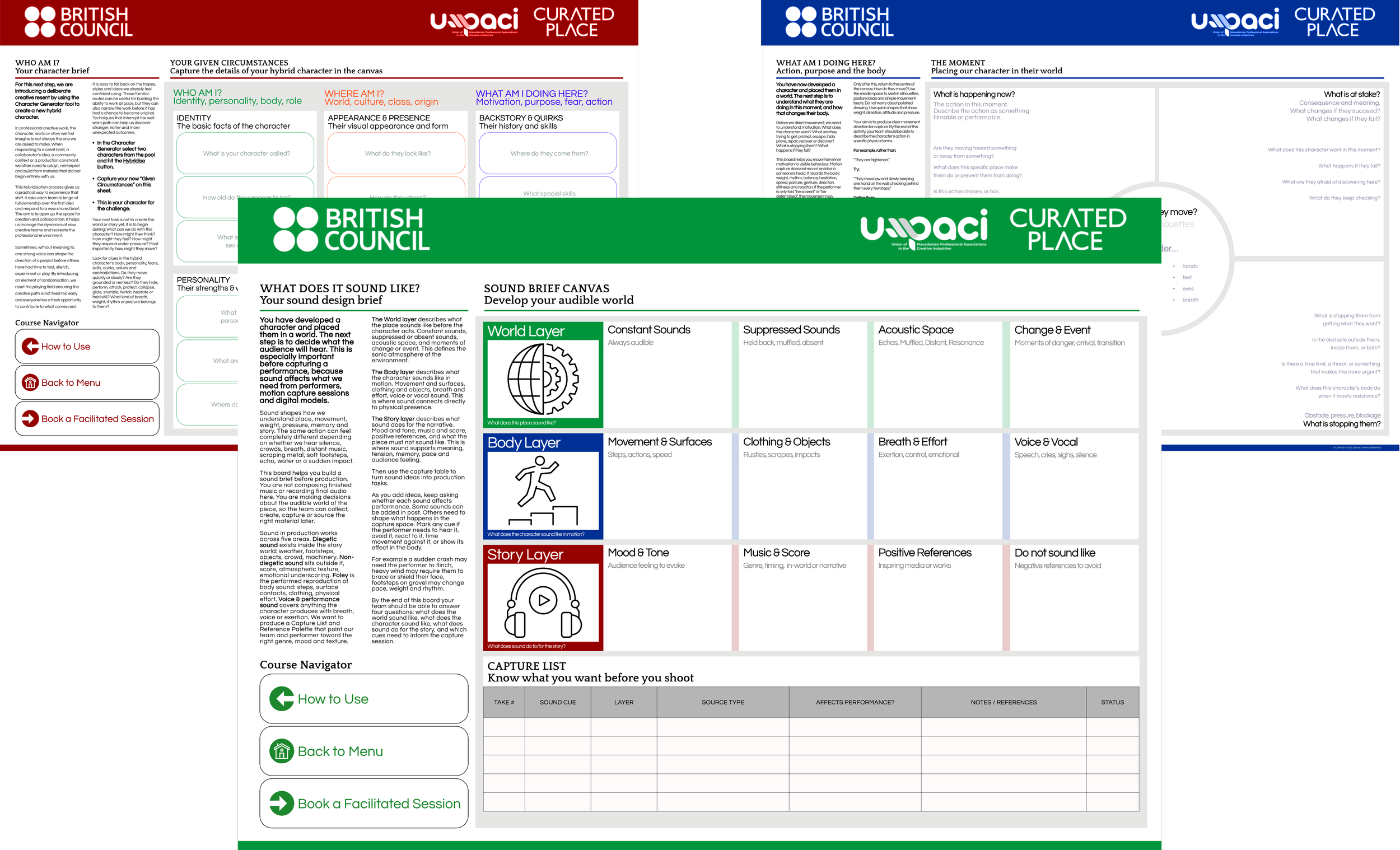
Explore What's Inside
-
Build a team profile covering each member's artform, skills and inspirations. It gives a new team a quick shared picture of who is in the room, without setting up a hierarchy.
-
Create a first character together across the six areas of the Given Circumstances grid. Then enter it into the Character Generator on the board.
-
Select two characters from the generator pool and hybridise them. This creative reset levels the playing field. It also gives the team the character it will develop for the rest of the challenge.
-
This session introduces the stand up format: three fixed questions, a parking area for longer issues, a 15-minute limit and a rotating Host and Scribe.
-
Build a mood board and decision space for your character's environment. Then agree why they have arrived and what the place does to them.
-
Define the moment your character is in (action, stakes, intention and obstacle), and sketch how it changes their body.
-
The second stand up gives new Hosts and Scribes practice in running the format.
-
Build a sound brief across world, body and story layers, with a capture list of the cues that affect performance.
-
Translate character, environment and motivation into three outputs: physical direction, a rehearsal sheet of key poses and a capture list for the session.
-
Hand over to the technical team to shoot on multiple cameras and develop a one-minute micro film.
Frequently Asked Questions
-
It is a set of 9 practical canvases, drawn from the Future Storytelling programme. They take a team through a 72-hour creation challenge, from team formation to motion capture and micr-production
-
Yes. Future Storytelling is supported by the British Council WB-UK Creative Skills Development Fund which enables partnerships between the Western Balkans and the UK. This initiative, part of the British Council's Creative Economy Programme, supports the creative industries as strategic economic sectors with transformative potential, with a specific focus on empowering youth skills and employment.
-
Educators running creative, screen or digital arts courses.
Students working in teams.
Independent creatives who want to develop characters for performance, animation, games or real-time production.
-
Not for the canvases, which only need Miro. The final session hands over to motion capture and Unreal Engine. Because the method is platform-agnostic, camera-based markerless tools can be used in place of a capture studio.
If you wish to use Unreal Engine is available free at:
https://www.unrealengine.com/download
-
The canvases are provided as a Miro board through links in the toolkit. You will need a Miro account, a free one is fine. Duplicate the board into your own account to work privately with your team. The Character Generator is embedded in the board, beside Your character and Who am I?, so it needs no separate login.
-
The toolkit is structured for 72 hours, and the time pressure is part of the learning. If you teach across a longer timetable, keep the session order and open each working day with a stand up.
-
No. The live programme included facilitation by the Curated Place team, technical support from SODA and access to a capture facility. The toolkit provides the canvases and guidance without that support.
-
You can contact the team using the support request button below or by booking a facilitated session, either from the canvases or directly on Miro.